How to Choose Dispatch Software for Bulk Materials
Most dispatch software was built for freight that gets planned once and then runs. Hauling gets replanned every morning, and the software has to keep up with that.
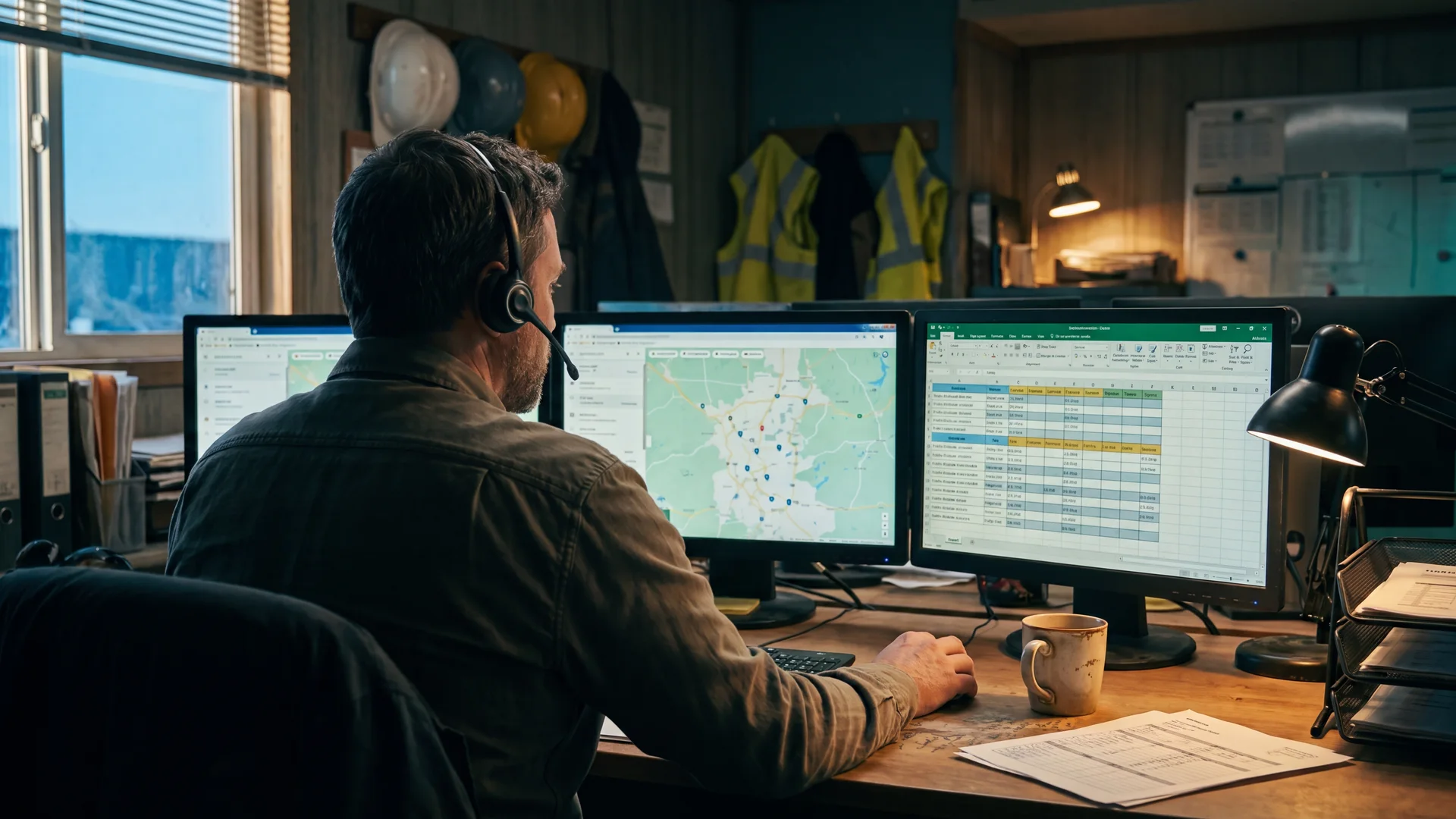
The dispatch software that fits a bulk materials operation is the one that lets a dispatcher rebuild the morning when a truck falls out, and gets the change to every affected driver without a phone call. Judge everything on that. The map, the reports, and the integrations matter, but they are what you look at once the day is running. Rebuilding the day is what you do at 5:40 a.m.
5:40 a.m. test
A truck falls out on a paving day. The driver called in, or the truck did not start. The paver is fed by a rotation of 8 trucks and it starts at 7. How many phone calls does it take to rebuild the morning, and how many people find out about the change by showing up to the wrong place? On a phone-and-spreadsheet operation the answer is a dozen calls, a couple of texts that do not get read, and at least one truck sitting at the wrong pit. On a board built for hauling it is one reassignment, and every driver whose day changed sees the new assignment on their phone before leaving the yard.
Where freight software breaks
Software built for parcel, LTL, or general freight assumes the plan is made once and then executed. Hauling breaks that assumption every day. Truck counts change the night before when a customer moves an order. The fleet is a mix of your own trucks, brokered trucks, and owner-operators who may only be with you for the week, and some of those drivers will never install an app. And the scale ticket belongs with the load it came from, which makes ticketing part of dispatch as much as billing. Freight tools handle the map and fail on the rest.
Four questions for the demo
- Can your own trucks, brokers, and third-party haulers sit on one board, or does the tool assume you only dispatch trucks you own?
- Will drivers use it with gloves on, and what is the path for the owner-operator who refuses to install anything?
- Is the ticket captured inside dispatch and attached to the load, or is ticketing a second product you will be sold later?
- When the day changes at 6 a.m., does the change reach the field in seconds or in phone calls?
Any sales rep can answer these in the abstract. Ask them to show each one with your truck list on the screen.
Three kinds of platform
Tracking-first platforms put GPS dots on a map and do it well. The dispatch board, the tickets, and the invoice live somewhere else, usually in other tools, and someone re-keys between them. Ticketing-first platforms digitize the scale ticket and leave dispatch to the phone. Full-cycle platforms run quote, order, dispatch, tracking, tickets, and invoicing on one load record, so the load dispatched at dawn is the record billed that night.
Which one fits depends on what hurts. If the only problem is not knowing where trucks are, tracking-first is cheap and quick to set up. If the office is buried in paper, ticketing-first fixes that first. If the cost is in the gaps between tools, meaning the re-keying and the invoices that go out 2 weeks late, only a full-cycle platform removes it, because each gap is a handoff between two products.
Where Tread fits
Tread is a full-cycle platform built for bulk materials. Own trucks, brokers, and third-party haulers run on one dispatch board. Drivers get their assignments in the app and photograph the ticket at the scale in the same app; a driver without the app texts the ticket photo to a number. Live location comes from the driver’s phone or from telematics already in the truck, such as Samsara, Motive, or Geotab, with nothing new to install. When a truck falls out, the dispatcher moves the load and the next driver gets it on their phone.
Run your own Tuesday
Skip the feature checklist and bring a real day to every demo: your truck list, your third-party haulers, and a job that changed overnight. Ask the demo to start at the moment the truck fell out and watch the dispatcher rebuild it. The platform that handles your Tuesday without a phone tree is the right one, and any software company confident in its board will take that test.